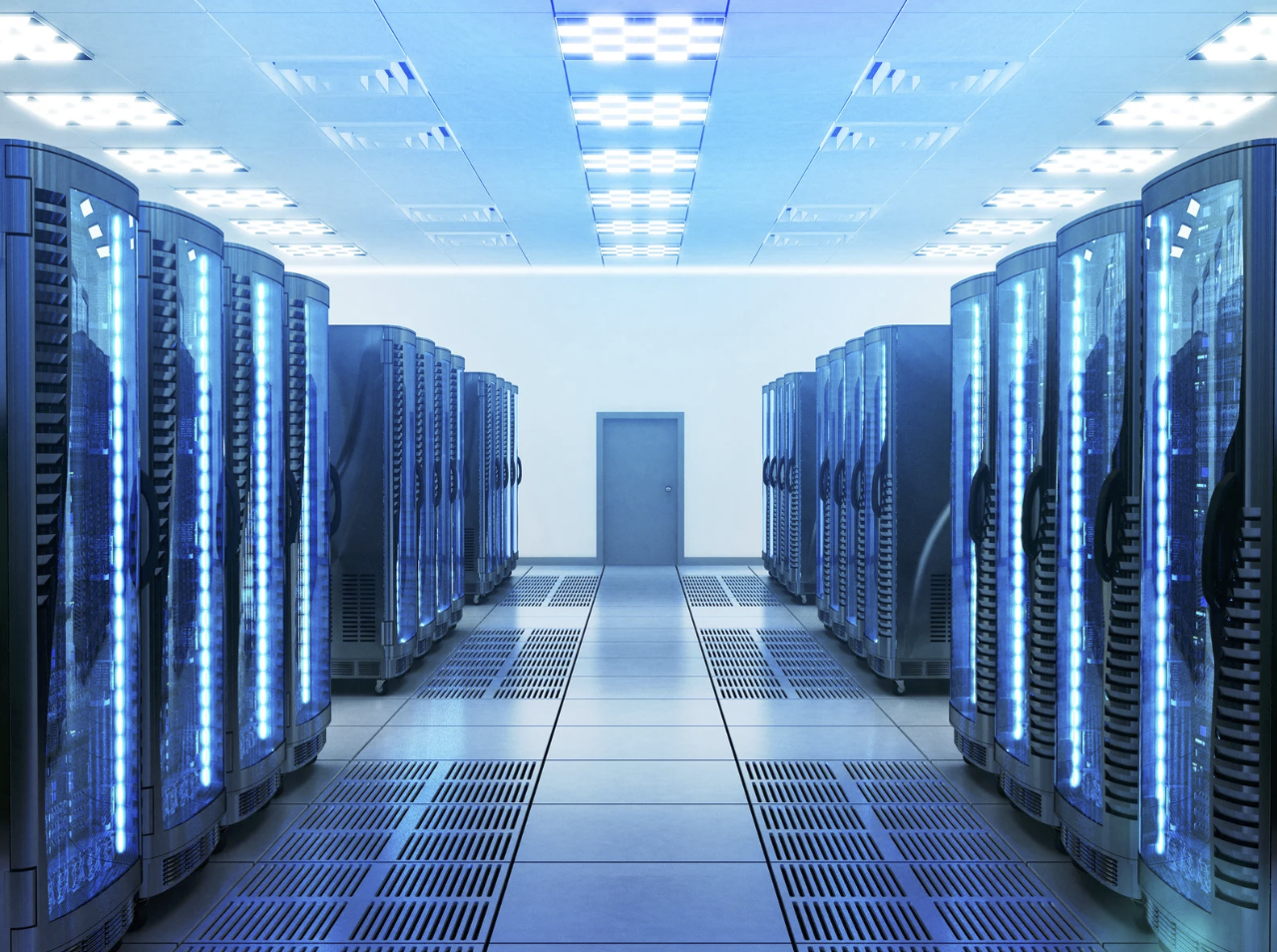

Are Data Centers Ready for the Cooling Demands of the AI Revolution?
Artificial intelligence is accelerating the expansion of data center infrastructure at an unprecedented pace. High-density GPU clusters, AI training environments, real-time inference, and emerging robotics workloads are driving power density higher across facilities worldwide. That power demand translates directly into heat, placing new pressure on cooling systems that were already operating near their limits.
Cooling systems account for an estimated 40 to 50 percent of total data center energy consumption. As facilities scale, even minor inefficiencies in cooling performance create compounding consequences. Small losses in heat transfer efficiency increase pumping energy, strain chillers, and narrow operational margins across entire campuses.
As AI workloads expand, data centers are increasingly deployed in water-stressed regions while facing higher expectations for reliability, sustainability, and regulatory compliance. In this environment, cooling reliability is no longer just an engineering concern. It is a strategic requirement.
One of the most overlooked contributors to cooling inefficiency is water quality within cooling towers and condenser water systems. These systems continuously circulate water containing suspended solids, biological growth, and debris. Over time, contaminants accumulate on condenser tubes, heat exchangers, and tower fill, reducing heat transfer efficiency and increasing system resistance.
Engineering studies show that as little as 0.002 inches of fouling on heat transfer surfaces can increase pumping energy requirements by up to 20 percent. Fouling does not happen suddenly. It builds gradually between maintenance cycles, quietly degrading performance and pushing cooling systems closer to their limits.
This is where filtration becomes a control layer rather than a maintenance accessory.
Tekleen automatic self-cleaning water filters are purpose-built to meet the operational requirements of modern data centers. Compared to traditional filtration approaches, Tekleen provides a best-fit solution for mission-critical cooling systems by combining uninterrupted flow, precision particle removal, and dramatically lower water consumption without adding operational complexity.
Tekleen automatic self-cleaning water filters are engineered for continuous operation in mission-critical data center cooling environments. Rather than stopping filtration to clean, Tekleen systems maintain uninterrupted flow while cleaning cycles complete in under 10 seconds using line pressure only. This allows cooling systems to remain stable and predictable under variable and high-density load conditions.
From a performance standpoint, Tekleen delivers a filtration solution aligned with modern data center requirements:
• Continuous operation with uninterrupted flow during cleaning
• Precision stainless steel filtration down to 2 microns
• Removal of up to 99 percent of suspended solids
• Minimal water use per cleaning cycle
• No external pumps, motors, or air scour systems
• No consumables such as media, bags, or cartridges
To illustrate the operational and financial impact of filtration choice, the following example uses typical operating assumptions for a 300 GPM condenser water system.
Illustrative Comparison Using Typical Operating Assumptions at 300 GPM
|
Metric |
Tekleen Automatic Self-Cleaning Filter |
Traditional Sand Media Filter |
|
Water used per cleaning cycle |
Approximately 35 gallons |
Approximately 900 gallons |
|
Typical cleaning behavior |
Short, frequent flush cycles |
Full backwash cycles |
|
Weekly water used for cleaning |
Approximately 1,470 gallons |
Approximately 18,900 gallons |
|
Reduction in cleaning water use |
Up to 96 percent |
Baseline |
|
Estimated annual water and wastewater cost |
Approximately $430 |
Approximately $5,460 |
|
Flow during cleaning |
Uninterrupted |
Interrupted |
|
Cleaning duration |
Under 10 seconds |
Up to 90 seconds |
|
External pumps or motors |
Not required |
Often required |
|
Media replacement |
None |
Every 3 to 7 years |
This illustrative example shows that at a single 300 GPM condenser water loop, filtration-related water and wastewater savings alone can approach $5,000 per year. These figures exclude additional savings from reduced chemical usage, lower labor requirements, preserved energy efficiency, and avoided downtime.
Traditional sand media filtration remains common in condenser water systems, but it was designed for applications where downtime and water waste are tolerated. In mission-critical data center environments, these limitations become operational liabilities.
Sand media filtration systems typically:
• Interrupt filtration during backwash cycles lasting up to 90 seconds
• Discharge up to 97 percent of rinse water as waste
• Capture particles only in the 20 to 40 micron range
• Allow fine solids to continue circulating between cleaning cycles
• Require daily inspection and periodic media replacement
• Consume significant mechanical room space
Maintenance strategy also shifts when filtration operates continuously. Most Tekleen installations require only two preventive service visits per year, reducing labor requirements by up to 90 percent compared to traditional media-based systems. Maintenance becomes predictable rather than reactive, supporting facilities with limited staffing and zero tolerance for cooling interruptions.
As data centers expand to support AI, robotics, and high-density computing, infrastructure constraints, not compute demand, will increasingly define the pace of deployment. Cooling and water management sit at the center of that constraint.
In modern data centers, uninterrupted flow is not just a cooling requirement.
It is a filtration requirement.