Automatic Self-Cleaning Water Filters for Steel
Steel production depends on clean, reliable cooling and process water. Tekleen automatic self-cleaning water filters remove suspended solids before they reach critical points in the line. Cleaner water protects spray nozzles, maintains heat transfer, and helps prevent unplanned stoppages. Filtration stays online during backwash for uninterrupted flow.
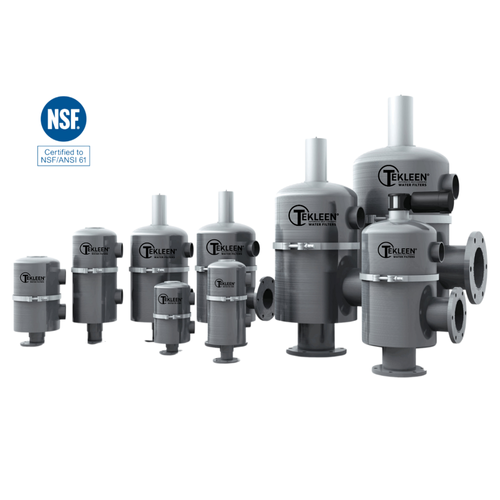
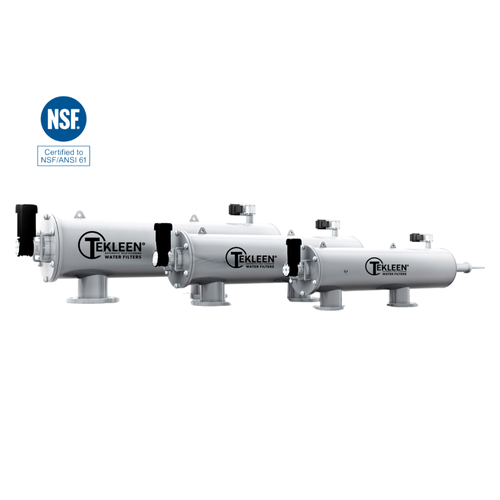
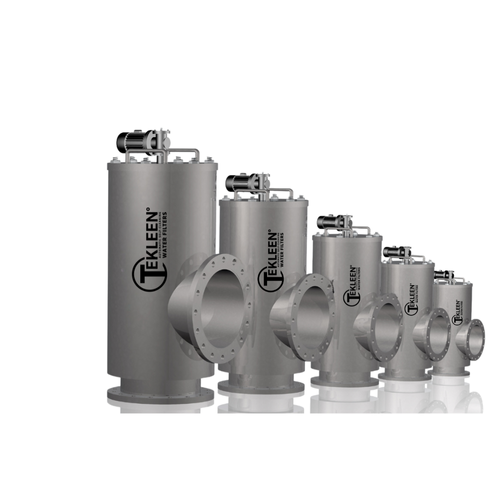
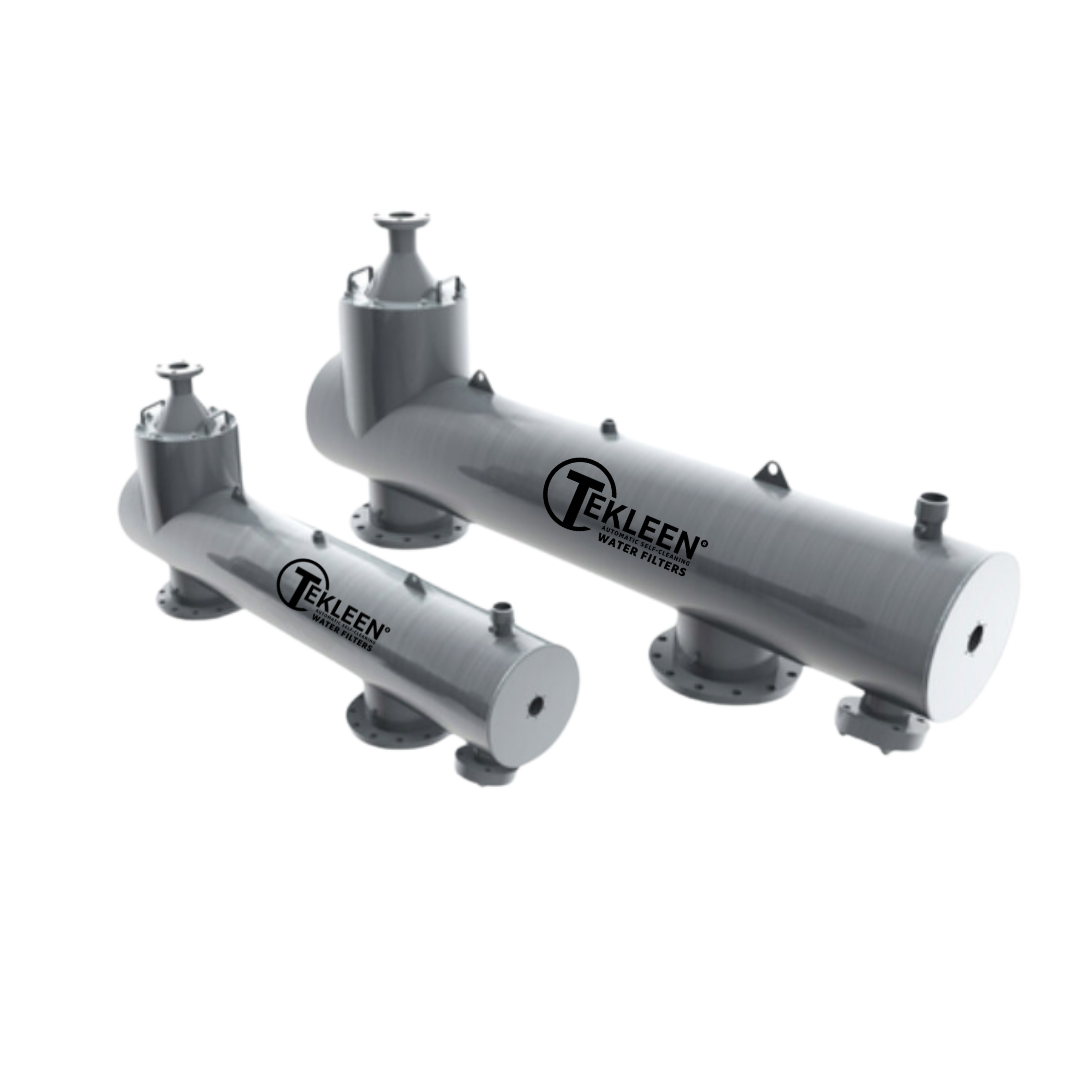
Tekleen filters use a stainless steel screen to capture particles inside the filter body. As dirt accumulates, differential pressure triggers an automatic backwash. A suction scanner rotates to clean the screen and flush debris through a drain while the unit remains online. This automated cycle reduces manual cleaning and helps keep the process running.
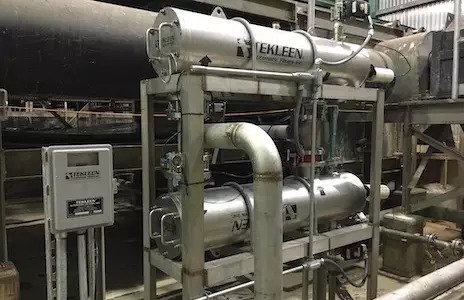
Tekleen filters are installed at key points in the cooling loop
Every Tekleen filter is engineered for reliability, durability, and performance. Facilities choose Tekleen because:
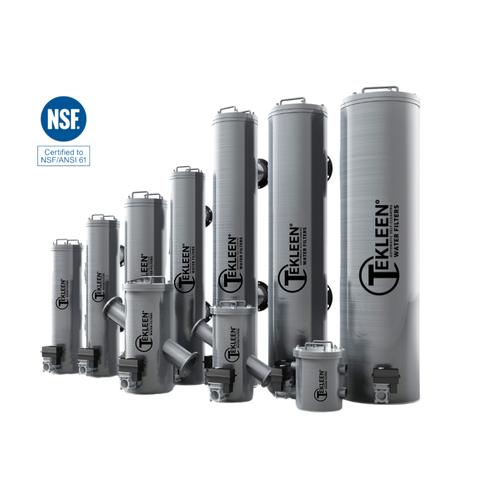
Tekleen automatic self-cleaning filters deliver reliable, high-efficiency water filtration with minimal maintenance, ensuring superior performance for industrial, irrigation, and municipal applications.
Steel process water continuously carries mill scale, iron oxides, and fine suspended solids through descaling and cooling systems. Over time, these particles accumulate in spray headers and nozzles, restricting flow, reducing spray uniformity, and directly impacting cooling performance and product quality.
Filtration down to 10 micron is typically required to remove these fine particles before they reach critical components. However, filtration performance must be continuous. Systems that allow solids to recirculate between cycles or interrupt flow during cleaning introduce variability into the process.
Tekleen automatic self-cleaning water filters continuously remove suspended solids while maintaining uninterrupted flow during backwash, preventing buildup at the source and maintaining consistent nozzle performance across continuous operations.
In large steel operations, filtration backwash is not a secondary consideration. It becomes a material contributor to water consumption and wastewater handling.
Illustrative example using a 10,000 GPM steel mill cooling loop
Sand media filtration
• Approximately 1,500 gallons per backwash cycle
• Multiple cycles per day depending on solids loading
• Weekly discharge can exceed 30,000 gallons per filter
• Total system discharge increases significantly across multi filter installations
Tekleen automatic self-cleaning water filtration
• Approximately 50 gallons per cleaning cycle
• Short, efficient cleaning cycles
• Significantly lower cumulative discharge
This represents an approximate 90 percent or greater reduction in filtration related water discharge, directly reducing hydraulic load on scale pits, clarifiers, and dewatering systems.
Steel cooling systems require filtration fine enough to remove suspended solids that contribute to fouling, abrasion, and clogging. While coarse filtration may capture larger debris, it allows fine mill scale to continue circulating through pumps, heat exchangers, and spray systems.
Filtration down to 10 micron is generally effective for protecting cooling infrastructure in steel operations. The objective is not only particle removal but maintaining stable water quality across continuous cycles.
Tekleen automatic self-cleaning water filters provide precision filtration while maintaining uninterrupted flow during backwash, ensuring consistent removal of fine particles without disrupting system operation.
Traditional filtration systems rely on periodic backwash cycles that interrupt flow or reduce system pressure. In steel manufacturing environments, where cooling and process systems operate continuously, even short interruptions introduce instability and risk.
Tekleen automatic self-cleaning water filters are designed to maintain uninterrupted flow during backwash, allowing cleaning to occur in parallel with system operation. This ensures that filtration does not become a point of disruption within the process.
Filtration systems directly influence the volume of water entering scale pits, clarifiers, and dewatering equipment. High backwash volumes increase hydraulic load, which in turn affects solids handling, sludge formation, and disposal frequency.
Using the 10,000 GPM example:
Sand filtration systems can discharge more than 30,000 gallons per week per filter
Tekleen systems reduce this discharge by approximately 90 percent
This reduction lowers:
• Dewatering runtime
• Sludge volume
• Equipment wear
• Disposal frequency and cost
Filtration, therefore, becomes a lever for improving downstream wastewater efficiency.
Steel process water presents one of the most challenging filtration environments due to the presence of mill scale, slag, and abrasive particles. Systems that are not designed for continuous solids removal can become overloaded, leading to performance degradation and increased maintenance.
Tekleen automatic self-cleaning water filters are engineered for high solids environments, continuously removing particles while maintaining uninterrupted flow during backwash. This prevents accumulation and protects system components from abrasive wear.
Frequent maintenance activities such as nozzle cleaning, pump repair, and manual system checks are often symptoms of poor water quality control.
By continuously removing suspended solids, filtration reduces fouling and wear across the system.
Tekleen automatic self-cleaning water filters help shift maintenance from reactive to predictable, reducing labor requirements and minimizing unplanned downtime.
By eliminating the need for manual cleaning and filter replacements, Tekleen filters help industries save thousands of dollars annually on maintenance and labor costs.
Filtration affects multiple cost drivers within steel operations, including water consumption, maintenance labor, equipment lifespan, and wastewater handling.
In high flow systems such as 10,000 GPM operations, reducing backwash volume and maintenance frequency can deliver $40,000 to $50,000 per year in combined savings, before accounting for additional benefits such as reduced energy consumption and chemical usage.
Tekleen filters serve a wide range of industries where clean water and operational efficiency are essential—including HVAC, manufacturing, food processing, agriculture, power generation, and municipal water treatment. These sectors rely on Tekleen’s automatic self-cleaning water filtration technology to support critical processes, protect equipment, and reduce costs through lower maintenance needs and water conservation.
Water filters for steel help maintain reliable cooling and process water quality in demanding mill environments. In steel production, suspended solids, grit, and scale can clog spray nozzles, reduce heat transfer, and increase fouling in cooling loops, heat exchangers, and other critical systems. Cleaner water helps protect equipment, support stable operation, and reduce unnecessary maintenance across the line.
Tekleen water filters for steel are designed for continuous operation with automatic self-cleaning performance and minimal manual intervention. This makes them a practical solution for facilities that need dependable filtration, lower labor demands, and better protection for sensitive process equipment in daily operation.
For broader background on steelmaking and process water demands, review the World Steel Association and the U.S. Environmental Protection Agency’s overview of iron and steel manufacturing effluent guidelines.
Water quality directly affects performance in steel mills where cooling efficiency, spray coverage, and equipment protection are critical to daily production. When suspended solids circulate through process water systems, they can increase fouling, reduce heat transfer, and create avoidable maintenance demands across the operation.
Tekleen automatic self-cleaning filters help steel facilities maintain cleaner water with less manual intervention. By removing debris before it reaches nozzles, cooling loops, and heat exchangers, they support more reliable operation, lower maintenance demands, and better long-term system performance in challenging industrial environments.