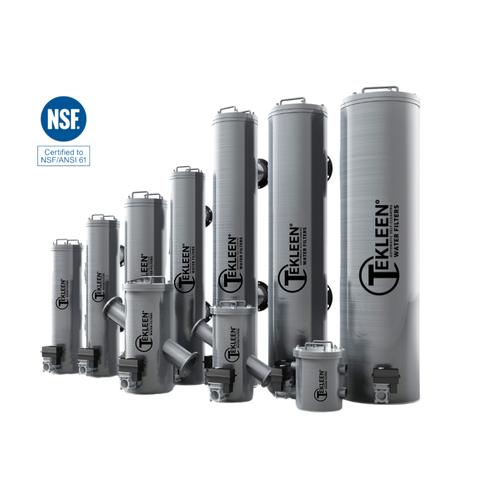
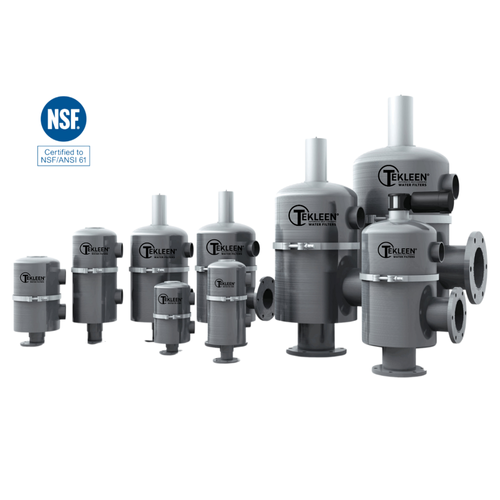
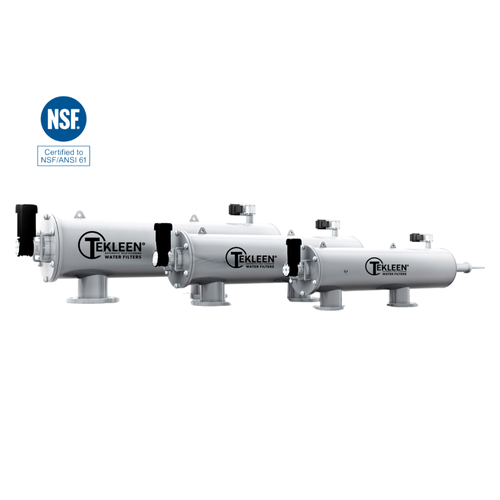
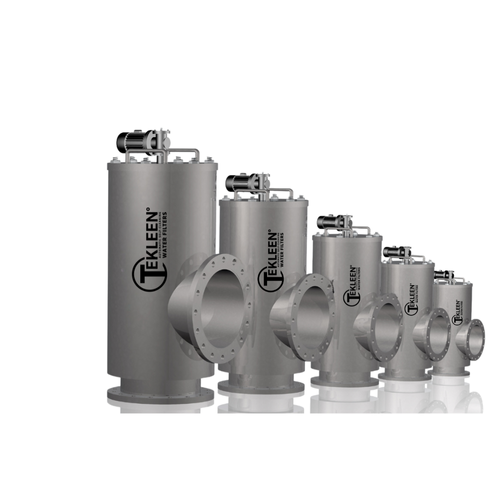
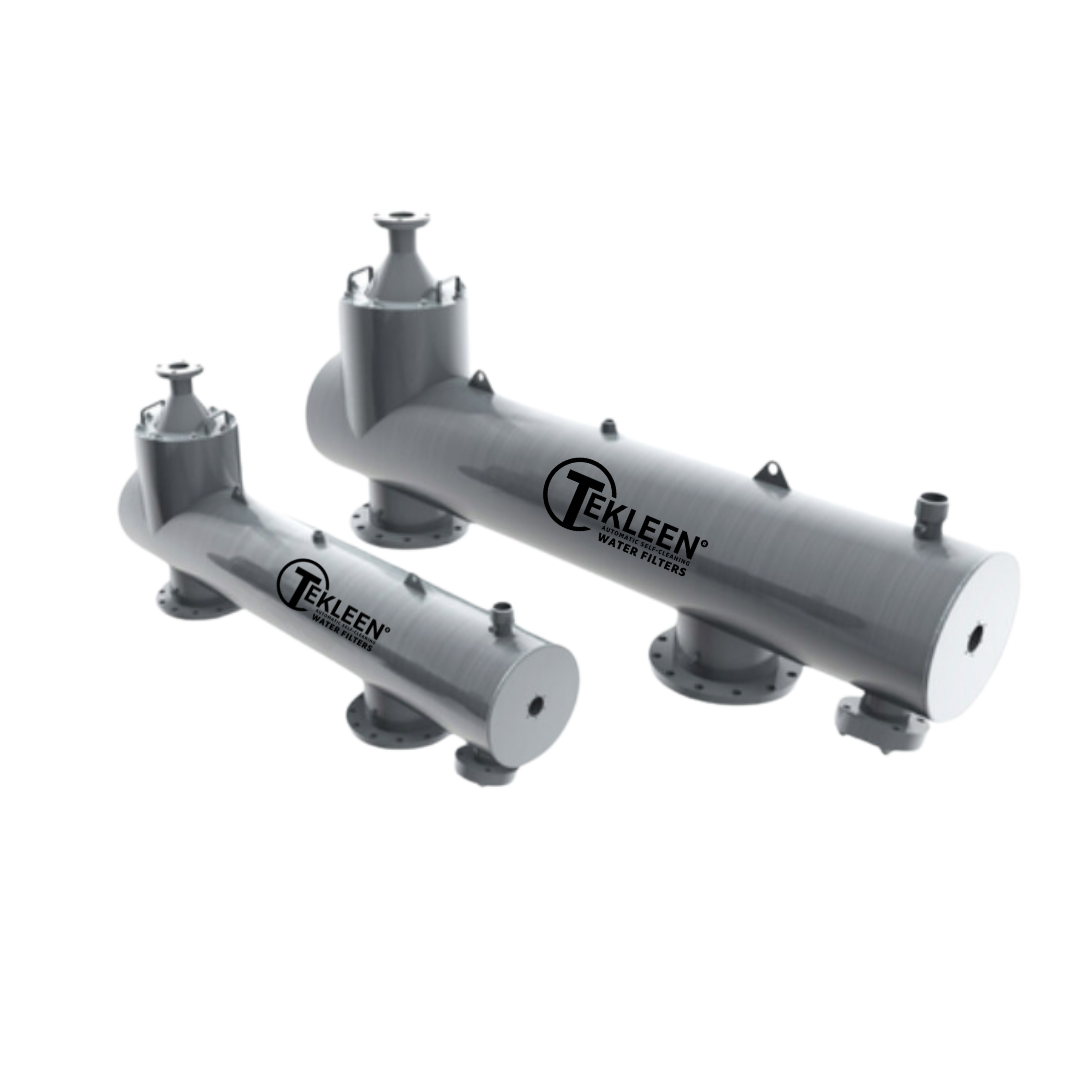
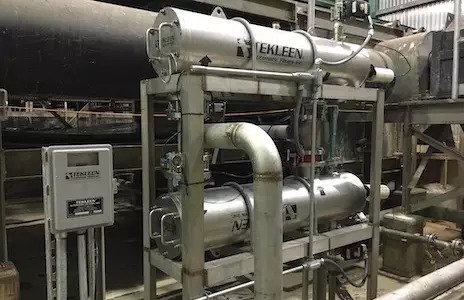
Steel production depends on clean, reliable cooling and process water. Tekleen automatic self-cleaning water filters remove suspended solids before they reach critical points in the line. Cleaner water protects spray nozzles, maintains heat transfer, and helps prevent unplanned stoppages. Filtration stays online during backwash for uninterrupted flow.
Why Tekleen Water Filters for Steel?
Tekleen filters use a stainless steel screen to capture particles inside the filter body. As dirt accumulates, differential pressure triggers an automatic backwash. A suction scanner rotates to clean the screen and flush debris through a drain while the unit remains online. This automated cycle reduces manual cleaning and helps keep the process running.
The Solution
Filtration Challenges Solved by Tekleen
Spray nozzle clogging Tekleen solution: fine screen filtration keeps sprays clean and consistent.
Scale and solids in cooling loops Tekleen solution: automatic self-cleaning removes suspended solids and reduces fouling.
Intake water grit and organics Tekleen solution: upstream filtration protects downstream equipment.
Manual filter maintenance Tekleen solution: automated backwash reduces operator time while systems stay online.
Water waste during cleaning Tekleen solution: efficient backwash minimizes rinse water volume.
Steel
Applications in Steel
Tekleen filters are installed at key points in the cooling loop
Plant intake water from rivers or surface sources to protect downstream cooling systems and equipment.
Caster cooling water to protect secondary cooling zones where scale and oil can accumulate.
Spray nozzle protection for descaling and product cooling to prevent clogging and uneven spray patterns.
Saw blade and cut off cooling to reduce particulate load and protect tooling.
Roll cooling and heat exchangers to maintain heat transfer and stabilize product quality.
Air compressor cooling to protect compressor heat exchangers and reduce fouling.
Why Steel Facilities Choose Tekleen
Every Tekleen filter is engineered for reliability, durability, and performance. Facilities choose Tekleen because:
Filters remain online during cleaning with no downtime
Stainless steel screens configurable to fine micron levels appropriate for nozzle protection.
Automated operation reduces labor and eliminates frequent cartridge or bag changes.
Compact design for plant intake areas, mechanical rooms, and point of use installations.
Can complement hydrocyclone or magnetic scale removal where needed in mill circuits.
Protect Your Steel System with Tekleen
Tekleen automatic self-cleaning filters deliver reliable, high-efficiency water filtration with minimal maintenance, ensuring superior performance for industrial, irrigation, and municipal applications.
Water filters for steel help maintain reliable cooling and process water quality in demanding mill environments. In steel production, suspended solids, grit, and scale can clog spray nozzles, reduce heat transfer, and increase fouling in cooling loops, heat exchangers, and other critical systems. Cleaner water helps protect equipment, support stable operation, and reduce unnecessary maintenance across the line.
Tekleen water filters for steel are designed for continuous operation with automatic self-cleaning performance and minimal manual intervention. This makes them a practical solution for facilities that need dependable filtration, lower labor demands, and better protection for sensitive process equipment in daily operation.
Water quality directly affects performance in steel mills where cooling efficiency, spray coverage, and equipment protection are critical to daily production. When suspended solids circulate through process water systems, they can increase fouling, reduce heat transfer, and create avoidable maintenance demands across the operation.
Tekleen automatic self-cleaning filters help steel facilities maintain cleaner water with less manual intervention. By removing debris before it reaches nozzles, cooling loops, and heat exchangers, they support more reliable operation, lower maintenance demands, and better long-term system performance in challenging industrial environments.